A reliable plumbing system is essential for every home, commercial building, and industrial facility. Choosing the right pipes can significantly influence water quality, installation costs, system durability, and long-term maintenance. Among the various plumbing solutions available today, uPVC pipes have become a popular choice because of their durability, corrosion resistance, and ease of installation.
Unplasticised Polyvinyl Chloride (uPVC) is a rigid plastic material widely used in cold-water plumbing and water distribution systems. Its combination of strength, low maintenance requirements, and cost-effectiveness makes it suitable for a variety of applications. Understanding the benefits of uPVC pipes can help homeowners, builders, and contractors make informed decisions when planning a new plumbing system or upgrading an existing one.
Benefits of Using uPVC Pipes:
1. Excellent Durability and Long Service Life
One of the biggest advantages of uPVC pipes is their durability. Unlike conventional metal pipes, uPVC does not rust or corrode when exposed to water under normal service conditions. This resistance helps maintain the integrity of the plumbing system over time.
High-quality uPVC pipes are also designed to withstand normal operating pressures when correctly selected and installed. Their resistance to corrosion and many common chemicals makes them suitable for long-term water distribution. With appropriate installation and maintenance, these pipes can provide dependable performance for decades.
2. Corrosion and Chemical Resistance
Metal pipes can deteriorate due to rust, mineral deposits, and chemical reactions, potentially leading to leaks and expensive repairs. uPVC pipes offer an effective alternative because they resist corrosion and are compatible with many common chemicals.
Read More: Top Lake View Villas Near Bangalore Airport for Luxury Buyers
This property makes uPVC pipes useful in residential plumbing, commercial water supply, and selected industrial applications. They can also be considered for environments involving certain corrosive fluids, provided the pipe specifications and chemical compatibility requirements are satisfied.
By reducing corrosion-related problems, uPVC piping helps support a more reliable plumbing system with fewer maintenance concerns.
3. Safe and Hygienic Water Supply
Water quality is a priority in every plumbing installation, particularly when the water is intended for drinking, cooking, and other household uses. Suitable uPVC pipes manufactured for potable water applications provide a non-metallic, corrosion-resistant pathway for water distribution.
Unlike corroding metal pipes, uPVC pipes do not rust and release rust-related particles into the water. Lead-free, non-toxic products designed for drinking-water applications can help maintain hygienic water transportation when installed correctly.
However, buyers should always verify the manufacturer’s certifications and confirm that the selected product meets applicable potable-water standards.
4. Lightweight and Easy to Install
Another important benefit of uPVC pipes is their lightweight construction. They are easier to handle, transport, cut, and position than many traditional metal piping materials. This can make installation more convenient for plumbers and construction teams.
Depending on the pipe design, compatible fittings and solvent-cement joining methods can also simplify assembly. Faster installation can reduce labour requirements and help construction projects stay on schedule.
Their convenient handling makes uPVC pipes suitable for plumbing installations in houses, apartments, offices, and other buildings where efficient installation is important.
5. Cost-Effective Plumbing Solution
The total cost of a plumbing system includes more than the initial purchase price of the pipes. Transportation, installation, repairs, and ongoing maintenance also influence the overall investment.
uPVC pipes can offer cost advantages because they are lightweight, relatively easy to install, and resistant to rust and corrosion. Reduced maintenance requirements can also help lower ownership costs over the system’s service life.
Read More: Why Are Modern Villas in North Bangalore in High Demand?
For builders and property owners working within a budget, uPVC pipes can provide a practical balance between performance, affordability, and durability. Actual savings depend on pipe specifications, installation conditions, and the quality of the materials used.
6. Smooth Inner Surface for Efficient Water Flow
The internal surface of a pipe affects how easily water moves through the plumbing system. uPVC pipes generally have smooth internal walls that help minimise friction and reduce the likelihood of scale-related flow restrictions compared with susceptible piping materials.
Efficient water flow can support reliable distribution throughout a building when the plumbing system is correctly designed. Appropriate pipe diameters, pressure ratings, and installation practices remain essential for achieving the desired flow rate.
7. Low Maintenance and Leak-Resistant Connections
uPVC pipes require relatively little routine maintenance because they do not rust and are resistant to many common forms of chemical deterioration. This can be particularly beneficial for concealed plumbing systems, where accessing damaged pipes may involve additional labour and repair costs.
When compatible fittings are used and joints are installed according to the manufacturer’s instructions, uPVC piping systems can provide secure, leak-resistant connections. Correct surface preparation, suitable joining materials, and adequate curing time are important for dependable results.
Regular inspection of accessible connections can further help identify potential issues before they develop into costly problems.
8. Versatile Applications Across Different Sectors
The benefits of uPVC pipes extend beyond household plumbing. Depending on their design and applicable standards, these pipes can be used in residential and commercial water distribution, public utilities, swimming pools, and selected industrial systems.
Their lightweight construction, corrosion resistance, and range of available sizes make them adaptable to different installation requirements. However, standard uPVC plumbing pipes are not automatically suitable for every application, particularly hot-water systems. Buyers should check the product’s intended use, operating temperature, pressure rating, and relevant technical standards before selecting a pipe.
Choose APL Apollo uPVC Pipes for Reliable Plumbing
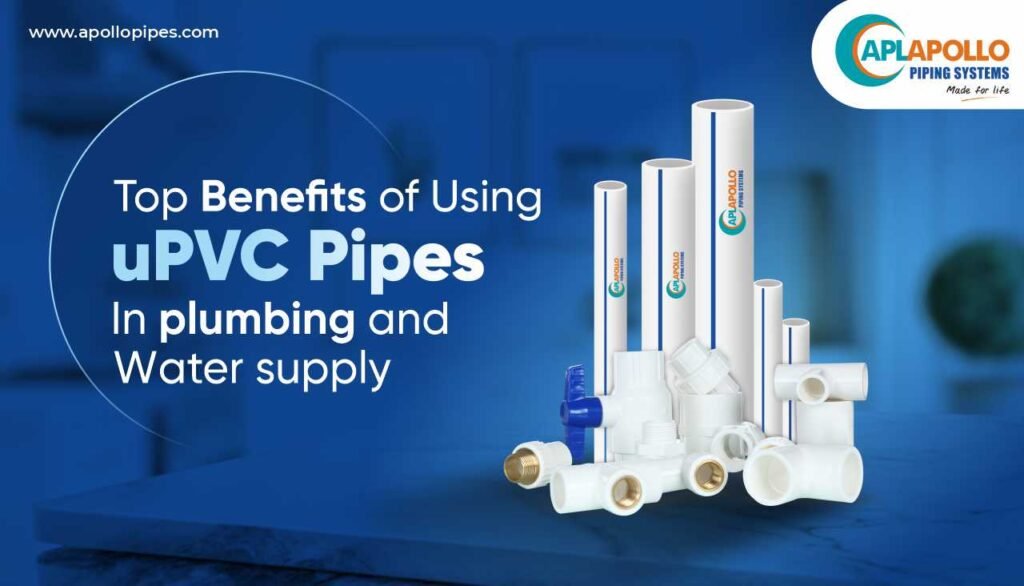
For those looking for a dependable plumbing solution, APL Apollo uPVC Pipes offer a range of features designed to support efficient water distribution.The range highlights leak-resistant joints, high tensile and impact strength, burst-strength performance, ease of handling, and resistance to many chemicals, including mineral acids, alkalis, and salts.
These pipes are available in Schedule 40 and Schedule 80 options, with sizes ranging from ½ inch to 4 inches.
APL Apollo also offers compatible plumbing fittings, including couplers, elbows, tees, adaptors, unions, and valves, with specified ranges and applicable ASTM standards. Beyond residential and commercial water distribution, the system is listed for applications such as swimming pools, hand pumps, saltwater lines, and selected industrial processes. For project-specific requirements, buyers should confirm the appropriate pipe schedule, dimensions, pressure rating, and application suitability before installation. Explore our official website (www.apollopipes.com) to review product details and choose a solution that matches your plumbing needs.